Individual Therapy
Sometimes we need to look at our relationship patterns alone
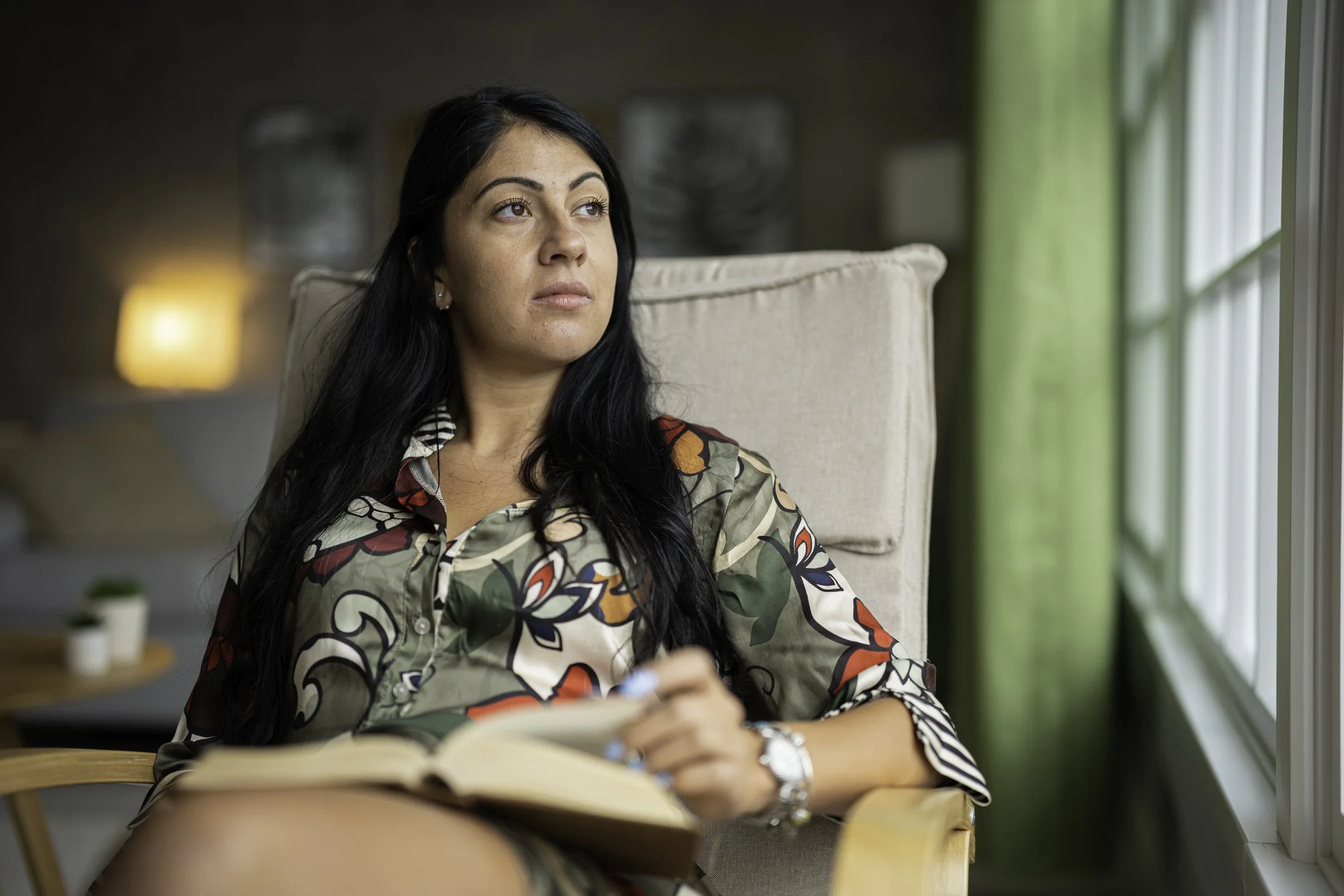
Individual therapy with relationship as its subject.
Perhaps your partner isn't ready to commence couples work, and you'd rather not wait. With just you in the room, we focus on what happens for you in relationship to others — the patterns you can describe and still can't interrupt in motion.
Perhaps something familiar keeps appearing across relationships, and you're ready to understand rather than repeat it.
Perhaps you are used to giving until resentment builds, and then something gives way. The eruption is the only part anyone remembers.
Perhaps you like to avoid conflict, stay quiet, and notice in the aftermath that you feel angry and stuck.
Perhaps you feel overwhelmed simply being in relationship with others and rely on doomscrolling to make life feel a little more in control.
Most likely you can see the pattern clearly and still can't stop it happening.

On coming alone
You don't need your partner in the room to change your experience of relationships.
Relationship dynamics are created by two or more nervous systems, but getting to know your interpersonal patterns and learned strategies, including trauma responses - fight, flight, freeze or fawn - builds new tools for you to use.
We can slow down the moment your chest tightens and your voice goes flat, find out what it's protecting, and build your capacity to stay in contact without leaving yourself — none of which requires the other person's participation, or their agreement that there's a problem.
When one person's responses change, the pattern between them changes too. Not always in the direction anyone predicted, and not always toward staying. But it moves.
Some people come alone and stay alone. Some come alone and bring their partner in later. There is no right or wrong order to this relationship process.

What we work on
Nervous system patterns that hinder your relationships. While these patterns were once adaptive and helped to protect you, they're now operating outside of the relationship they were built for.
How nervous system responses shape relationships. You’ll build a somatic toolkit that will help you notice, assess your level of activation so that you can show up differently with loved ones.
What happens in the moment of contact: the bid you made that didn't land, the one you almost made, what your body did instead of asking.
What's underneath — the need that never got said out loud, the no that arrives too late and too sharp, the want you can't name until you're alone again.
The part of you that keeps doing this, and what it's afraid will happen if it stops. There's usually more than one part involved, and they don't typically agree with each other.

The pattern I work with most
I have spent decades working with and supporting women. I have come to understand gender training as deeply relational for individuals assigned female at birth.
From early on, girls are shaped to attend to the needs of others. By the time they hit womanhood, many have acquired the skills required to manage the relationships they're in. They read the room before they read themselves, smooth things over, agree in the moment and notice later they didn't mean it. It looks like generosity, and some of it is.
The cost arrives late. Years of giving from a reserve that isn't there, and then something gives way — usually as anger that surprises everyone, including them, followed immediately by shame.
If that's recognizable, it's workable, and it's a good deal of what I do.

About Me
Licensed clinician · 25 years of experience
In person: Providence, RI
Telehealth: RI, NY, WI, and ME
I know firsthand how draining and frustrating relationships can be, even with the people I love dearly. That’s part of why I do this work — I’m not standing outside the problem.
I’m a licensed counselor in Rhode Island, New York, Wisconsin, and Maine, and I’ve worked as a psychotherapist for 25 years, primarily in the area of relational trauma
Before that, I was an actor. I fell in love with the stage as a child because it let me step into someone else’s experience and live there for a while. This work is a continuation of that same reach.
Common Questions
I’m out of network, and I provide a superbill you can submit to your insurance for reimbursement. Many plans cover a portion of out-of-network mental health care once your deductible is met.
$250 for couples, $200 for individuals. Sessions are a full 60 minutes.
What does a session cost?
Do you take insurance?
Do you see clients in person or online?
In person in Providence and Rhode Island, or by video if that’s easier for you. I’m also licensed in New York, Wisconsin, and Maine, and see clients by video in those states.
All sessions are a FULL hour. Initially I request that you attend weekly so that we can get momentum going. I am also happy to flex to your schedule needs.
How long is a session, and how often do we come?
Book a free 20-minute call. We’ll talk about what’s going on and whether I’m the right fit — no obligation. I respond to all inquiries within